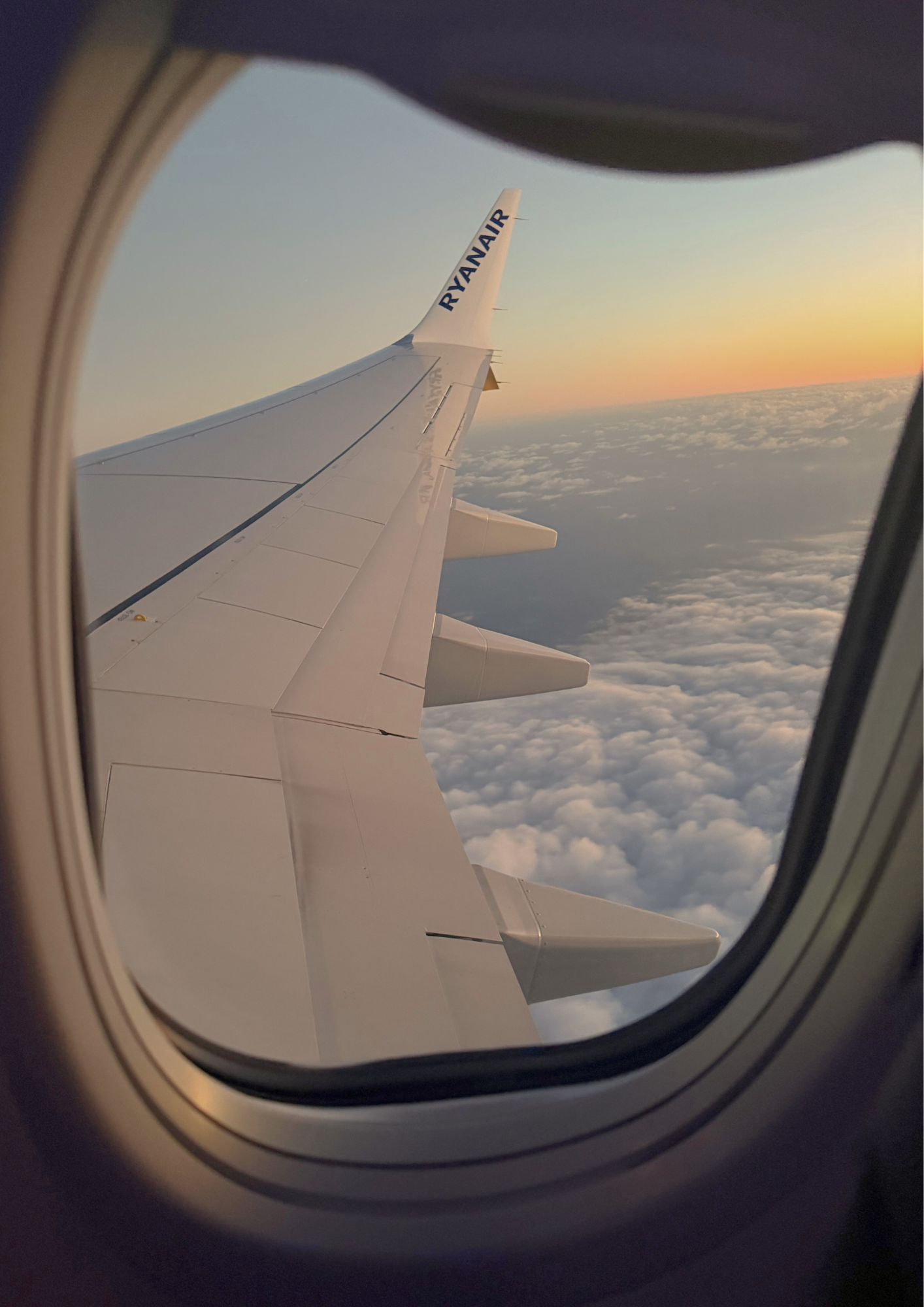
If you’ve ever found yourself staring at flight prices at midnight, convinced they’re personally messing with you, you’re not alone.
One day it’s £89 to Barcelona, the next it’s £243 and you haven’t even had the audacity to click anything!
Flights feel mysterious, unpredictable and occasionally spiteful.
But here’s the good news: while there’s no single magic moment that guarantees the cheapest fare every time, there are patterns. And once you understand how airlines think, you can stop guessing and start booking with confidence.
Here’s what actually works and at the end of this post I’ve shared how I never pay more than £100 for a flight!
First things first: Is there a perfect day to book?
Short answer: not really.
Long answer: kind of, but not in the way TikTok or your mate’s cousin insists.
You’ll often hear things like “Always book on a Tuesday” or “Flights drop at 2am”. These ideas did have some truth to them years ago, when airline pricing systems were simpler. But now prices are dynamic so it doesn’t work so easily.
Dynamic pricing
Flight prices change constantly based on demand, seasonality, route popularity and how many seats are left. It’s something that can be both random and easily predictable at the same time.
We all know flights will be more expensive during the school holidays or if there’s a major event or it’s ski season.
But when Amy and Ben announce their wedding in Lisbon and 100 guests start searching for flights, well that’s unpredictable and flights will shoot up accordingly!
So no, Tuesday isn’t a sacred booking day. And staying up until 3am refreshing Skyscanner probably won’t unlock secret discounts.
What does matter is how far in advance you book and when you plan to fly.
The sweet spot: How far in advance should you book?
For most flights, there’s a booking window that tends to offer the best value. Miss it, and prices creep up. Book too early and you might actually overpay.
Here’s a handy rule of thumb for UK travellers:
Short-Haul Flights (Europe & UK)
- Best time to book: 6-8 weeks in advance
- Acceptable range: 1-3 months ahead
For flights to places like Spain, Italy, France or even domestic UK routes, airlines release competitive pricing a couple of months out. This is when they’re still trying to fill seats but demand hasn’t gone wild yet.
Booking six months ahead for a weekend in Amsterdam? Probably unnecessary. Booking two days before? Almost always painful.
Long-Haul Flights (USA, Asia, Australia)
- Best time to book: 3-6 months in advance
- Peak routes (e.g. London-New York): closer to 4-5 months
- Long LONG haul: The earlier the better
Long-haul flights follow a slower pricing curve. Airlines know people plan these trips earlier, so prices stay fairly stable…until suddenly they don’t! Once seats start filling, fares climb quickly.
For Australia or New Zealand, earlier is usually better. Those routes rarely get last-minute bargains.
The worst time to book (yes, it exists)
Let’s talk about when not to book.
Last-Minute (Usually)
Unless you’re flying midweek on a quiet route or you’ve found a genuine error fare, last-minute bookings are rarely cheap. Airlines know business travellers and desperate planners will pay more.
I’m not saying it’s completely impossible to find a last-minute bargain but it’s not very likely and definitely isn’t worth waiting for.
During Peak Travel Panic
If everyone is suddenly booking the same thing such as Christmas, school holidays, summer weekends then prices jump fast.
If you’re booking flights:
- For August ? aim for April or May
- For Christmas ? book by October at the latest
- For Easter ? February is your friend
Waiting until everyone else starts searching is a guaranteed way to overpay. You want to be booked before their search begins.
Does the day you fly matter? Oh, yes.
While the day you book isn’t hugely important, the day you fly absolutely is.
Cheapest days to fly
- Tuesday
- Wednesday
- Saturday (sometimes)
Midweek flights, especially short-haul, are often cheaper because fewer people want them. Most people take 4-5 day breaks to short-haul destinations so they’ll usually plan it around a weekend to save on annual leave.
Business travellers dominate Mondays and Fridays, pushing prices up to ‘business destinations’. While any destination can technically be a business destination, there are some that are more common for business travellers than others, such as Brussels, New York, London, Dubai, Frankfurt etc. While other destinations, such as Lanzarote, Mallorca, Agadir or Lapland are rarely popular for business travellers so price trends there might be more sporadic.
Most expensive days to fly
- Friday departure
- Sunday return
Sunday returns are particularly notorious. Everyone wants to be home before Monday and airlines price accordingly.
Switch your weekend trips
If you can shift your trip by even one day, you can save a surprising amount on weekend breaks. Friday to Sunday is most expensive and you may find that Saturday to Monday is considerably cheaper.
Time of day: Does flying early actually save money?
Often, yes!!
Early morning and late-night flights are less popular. Nobody loves a 6am departure or landing at midnight, so airlines drop prices to make them more appealing.
If you’re willing to:
- Wake up at an ungodly hour
- Or land a bit later than ideal
You’ll often be rewarded with cheaper fares.
I actually prefer a really early departure flight and a very late return. You get longer in your destination and airports are quieter. You don’t have to worry about traffic or queues when you’re travelling to the airport at 4am!
Just remember that those early and late flights can also cost you extra money. You may need to take a taxi instead of public transport or even stay in a hotel the night before the flight so for some people those unsociable flight times aren’t worth it.
Seasonality: Timing your trip is half the battle
This is where UK travellers can really win or lose.
High Season (Most Expensive)
- July & August
- Christmas & New Year
- Easter holidays
- February half-term (for ski routes)
During these periods, airlines don’t need to entice you. Plan early or prepare to pay more.
Shoulder Season (Best Value)
- May-June
- September-early October
This is the sweet spot. Weather is usually good, crowds are thinner and prices drop noticeably. Europe in September is elite travel energy.
Low Season (Cheapest)
- January (excluding New Year)
- November
If you don’t mind cooler weather or quieter cities, this is when bargains shine.
Are flight prices cheaper in incognito mode?
Ah yes, the internet’s favourite myth.
The idea is that airlines track your searches and raise prices when you keep checking. In reality, prices change due to demand and availability, not because you personally looked six times.
Incognito mode does not make a difference to flight prices.
Price alerts: Let technology do the work
If you take one thing from this post, let it be this:
Set up price alerts.
Sites like Google Flights and Skyscanner allow you to track routes and get emails when prices drop. This is especially useful if your dates are flexible.
Instead of obsessively checking, you let the deal come to you!
UK-Specific tips you’ll actually use
Because not all advice works the same everywhere.
Consider regional airports
Flying from Manchester, Birmingham, Bristol, or Edinburgh can sometimes be significantly cheaper than London, especially for European routes.
It’s always worth checking multiple departure airports, even if it means a train journey.
One-way vs return
In Europe, low-cost airlines often price one-way flights competitively. Sometimes booking two separate one-way tickets (even with different airlines) is cheaper than a return.
Just double-check baggage rules.
If you’re using Skyscanner to find your flights rather than the airline website then you’ll usually see this pricing difference easily.
Beware of budget airline traps
A £19 flight isn’t £19 once you’ve added:
- Cabin bag fees
- Seat selection
- Getting to that random airport that’s actually 2 hours from the city centre
Always compare the total cost.
Having said that, I never EVER pay for a cabin bag. I always fly with just the free underseat bag. I also don’t pay for seats together as you can almost always move once you’ve taken off (or just enjoy sitting apart and read a book!)
Should you ever book super early?
Sometimes, yes.
If you’re travelling:
- During school holidays
- To a high-demand destination
- With fixed dates (weddings, events, cruises)
- You’re going to long-haul
Booking early locks in certainty, even if it’s not the absolute cheapest price. And honestly? Peace of mind has value. It’s not always about the price of your flight, sometimes just knowing it’s all booked and organised is worth paying a little extra.
The golden rule: Cheap enough is cheap enough
This might be the most important tip of all.
If you see a price that fits your budget, your dates, and your plans then book it!
Waiting for the perfect deal often leads to higher prices and regret. Flight prices don’t gradually fall forever. They dip, they rise, they spike and they vanish.
A good price booked early beats a theoretical bargain that never comes.
Another golden rule: Know what’s average
If you don’t know what the average price is, you’ll never know when you’ve found a bargain. I regularly look at flight prices so I know I can usually fly to most places in Spain for about £100. I can go to Dublin for about £50 and I can go to Australia for about £1,600.
If I didn’t know what was average, I wouldn’t know when I’d stumbled across a bargain.
We all know about ‘sales’ where companies put the price up for a few weeks and then bring it back down and call it a ‘sale’. You need to know what’s average to know when the sale is the real deal!
So finally… When is the best time to book a flight?
Let’s wrap it up nicely:
- Short-haul: 6-8 weeks before
- Long-haul: 3-6 months before
- Long long-haul: 6-9 months before
- Fly midweek if you can
- Avoid peak seasons or book early for popular dates
- Use price alerts
Flights don’t have to feel like a gamble. Once you understand the patterns, you’re in control, not the algorithm.
And next time you snag a bargain, you can casually say, “Oh, I just booked at the right time.” Like it was effortless.
Safe travels!





This is so useful Monica! Thank you for this! It’s completely demystified it for me now.