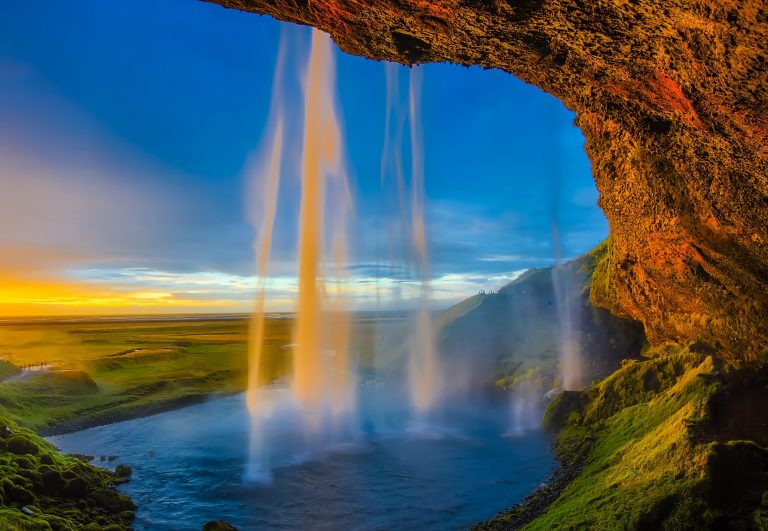
Iceland has a way of making you feel very small, which is surprising for such a small country. Not in a bad way. In the kind of way where you’re standing in front of a waterfall so powerful you can feel the spray on your face from hundreds of metres away. Or you’re driving through a landscape that looks like it’s been borrowed from another planet and you realise there isn’t another car in sight.
It’s wild, dramatic, beautiful and completely unforgettable.
I’ve visited Iceland four times now and every trip leaves me desperate to go back, usually before I’ve even left. But if there’s one thing I’ve learnt, it’s that the best way to experience Iceland isn’t by staying in hotels and hopping between organised tours.
It’s by campervan. Hiring an RV or motorhome in Iceland is definitely the best way to see this gorgeous country!
Iceland is one of those destinations where the journey becomes just as exciting as the destination, and having your accommodation on wheels gives you a freedom that’s hard to beat.
If you’re planning a short trip and want to squeeze every last drop out of your time in Iceland, here’s why I think a campervan is the ultimate way to do it.

Why Iceland and campervans are the perfect match
There are some countries where driving from A to B feels like a chore.
Iceland is not one of them.
In Iceland, the drive is often the highlight of the day. You’ll leave one incredible viewpoint only to pull over again ten minutes later because you’ve spotted a lava field stretching to the horizon or a mountain that looks like it’s been carved by giants.
The landscapes change constantly. One minute you’re driving through black volcanic deserts. The next you’re passing bright green moss-covered lava fields. Then suddenly there are snow-capped mountains, glacial rivers and waterfalls tumbling down cliffs.
It genuinely feels like you’re travelling through several countries in a single day.
A campervan allows you to experience all of this at your own pace.
There’s no rushing back to a hotel for check-in. No trying to squeeze everything into a strict itinerary. No long drives back to your accommodation at the end of the day.
Instead, you simply keep exploring until you’re ready to stop. And in a country as beautiful as Iceland, that flexibility is priceless.
And let’s not forget that hotels in Iceland are expensive so campervans can be a more cost effective way to see the country, especially if you’d be hiring a car anyway. Campervan hire in Iceland is surprisingly affordable. I like to use a price comparison site like Campstar to see all your options across multiple suppliers.
You save time and money
Let’s be honest. Iceland isn’t cheap.
Accommodation can be one of the biggest expenses, especially during the summer months when hotel prices can climb surprisingly high.
When you’re travelling by campervan, your transport and accommodation are rolled into one. Not only can this save money, but it also saves something that’s arguably even more valuable on a weekend break: time.
When you’ve only got two or three days in Iceland, you don’t want to spend hours driving back and forth from a hotel. With a campervan, you’re already where the adventure is happening.
You can wake up surrounded by incredible scenery, make a coffee while looking out at a glacier or mountain range, and be on the road within minutes. There’s something wonderfully simple about that.
Travel Hack Tip: Wild camping in a campervan is illegal in Iceland so you will need to pay for proper campsites, but these are considerably cheaper than staying in hotels.

Waking up in the middle of the landscape
One of my favourite things about campervan travel is how connected you feel to a destination. When you stay in a city hotel, it’s easy to feel slightly removed from the landscape around you. In a campervan, you’re immersed in it.
I still remember waking up early one morning, pulling back the curtains and seeing mist drifting across the mountains while the morning light turned everything golden. The air felt crisp and fresh. There was complete silence apart from a distant river. It was one of those travel moments that stays with you long after you’ve come home and it was pure magic.
The landscapes are so dramatic and so vast that simply being there, sat in your campervan, feels like an experience.
The places you can reach are incredible
One of the biggest advantages of having your own wheels is being able to venture beyond the most popular tourist stops.
Of course, you’ll want to see famous attractions like the Golden Circle, Gullfoss Waterfall and Seljalandsfoss. They’re popular for a reason.
But some of my favourite Iceland memories have come from the quieter moments in between. The tiny roadside viewpoints. The black sand beaches that seem to stretch forever. The hidden waterfalls you stumble across while driving.
These are the places that often end up being the highlights of the trip.
Having a campervan means you can stop whenever something catches your eye. And trust me, in Iceland that happens a lot!
Booking the right campervan
The good news is that Iceland is incredibly well set up for campervan travel.
There are campsites across the country and the roads are generally easy to navigate, particularly if you’re sticking to the Ring Road and the main tourist routes.
You can book campervan rental in Iceland through Campervan Iceland. They’re a local Icelandic operator that’s been helping travellers explore the country since 2013. You can collect your campervan at Keflavík Airport, which makes arriving and getting on the road incredibly easy. They offer everything from practical 2WD campervans to 4×4 options with rooftop tents, depending on the kind of trip you’re planning. Unlimited mileage and base insurance are included, and the customer service is great.
When choosing your vehicle, think about the season and the type of roads you’ll be driving. For most short summer road trips, a standard campervan is absolutely fine. If you’re planning to explore more remote areas or travel outside the main season, a 4×4 may be worth considering.
When to go
Iceland is one of those rare destinations that’s amazing year-round and every season offers something completely different.
Summer brings long daylight hours and endless opportunities for exploring. During June and July, it barely gets dark, which means you can fit an extraordinary amount into a short trip.
Autumn brings beautiful colours and fewer crowds.
Winter feels wonderfully magical, with snow-covered landscapes and the possibility of seeing the Northern Lights.
Spring offers a quieter experience while still delivering plenty of dramatic scenery.
Personally, for a weekend campervan adventure, I’d choose late spring, summer or early autumn so you can make the most of the longer days during a short trip. The roads are generally easier to navigate and you’ll have longer daylight hours for sightseeing.
A perfect weekend itinerary
If you’ve only got a long weekend in Iceland, don’t worry. You can still see an incredible amount, especially if you have your own wheels.
Day one: the Reykjanes Peninsula
After landing, collect your campervan from the airport and get yourself settled in. You may wish to head to a supermarket to stock up on supplies before beginning your adventure! I’d then recommend heading straight out onto the Reykjanes Peninsula.
This area often gets overlooked by visitors rushing towards the south coast, but it’s packed with dramatic volcanic scenery. You’ll find steaming geothermal areas, rugged coastlines and lava fields that look completely otherworldly. It’s the perfect introduction to Iceland’s raw beauty.
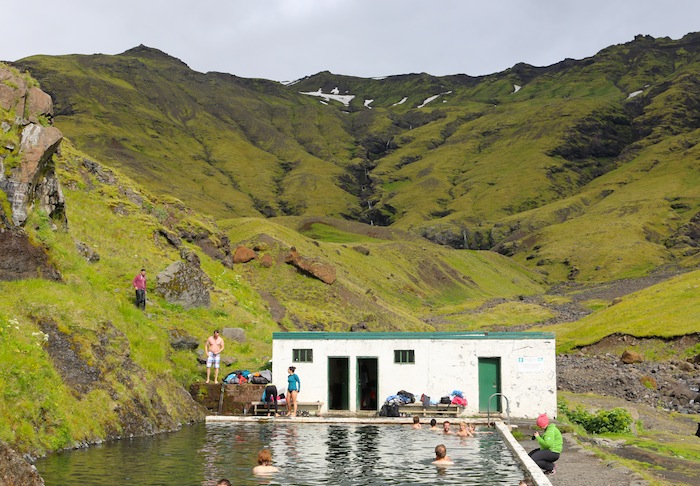
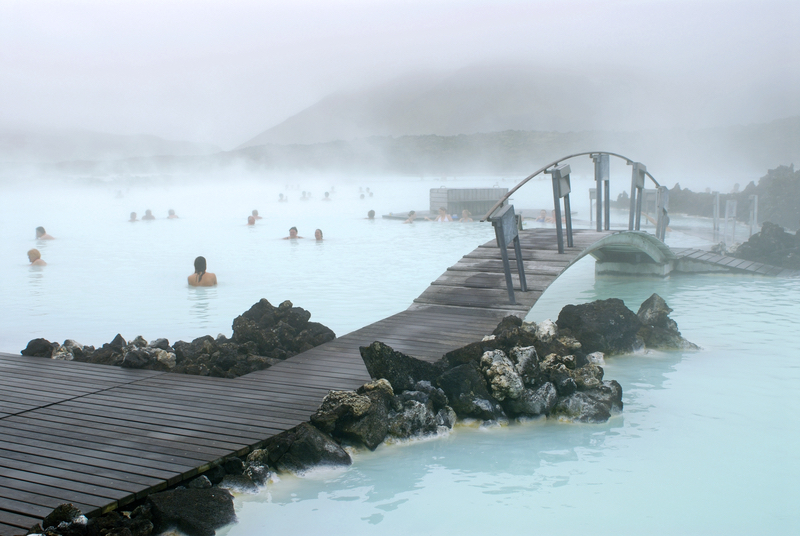
If you have time, stop at the Blue Lagoon or one of Iceland’s lesser-known geothermal spas for a relaxing soak after your flight.
Day two: the south coast
The south coast is where Iceland really starts showing off. This stretch of road is packed with waterfalls, glaciers, black sand beaches and towering cliffs.
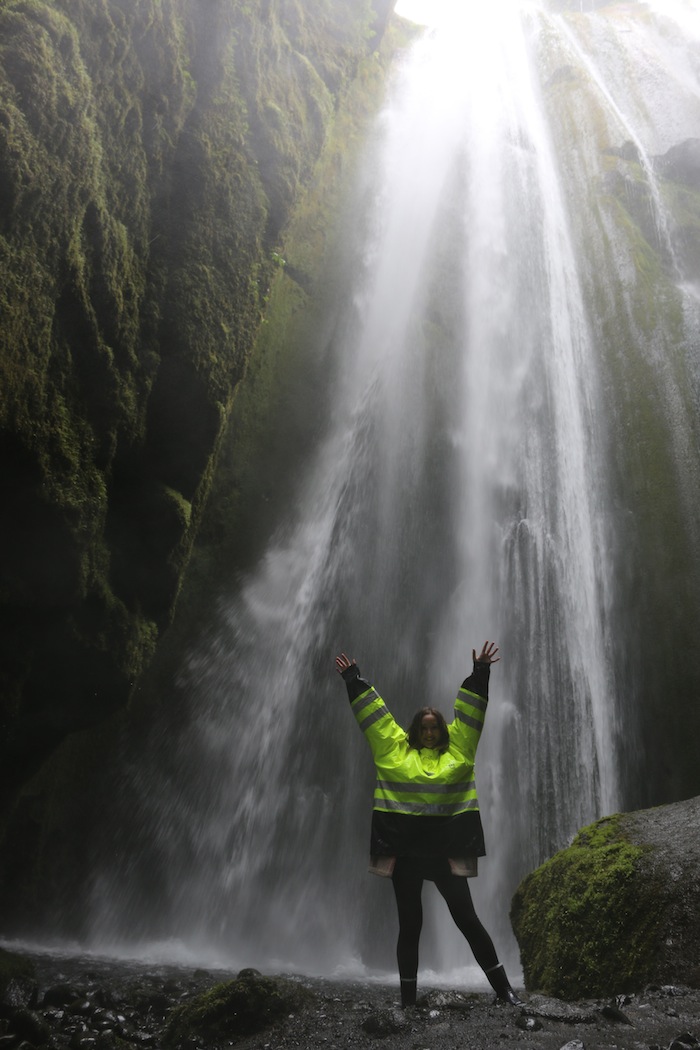
Seljalandsfoss is one of my favourite waterfalls because you can actually walk behind it and there’s something so magical about that experience. A little further along you’ll find Skógafoss, another spectacular waterfall that feels almost impossibly powerful up close.
Continue towards Reynisfjara Beach and you’ll discover black volcanic sand, crashing Atlantic waves and dramatic basalt columns.
The entire coastline feels wild and untamed.
Day three: glaciers and the journey back
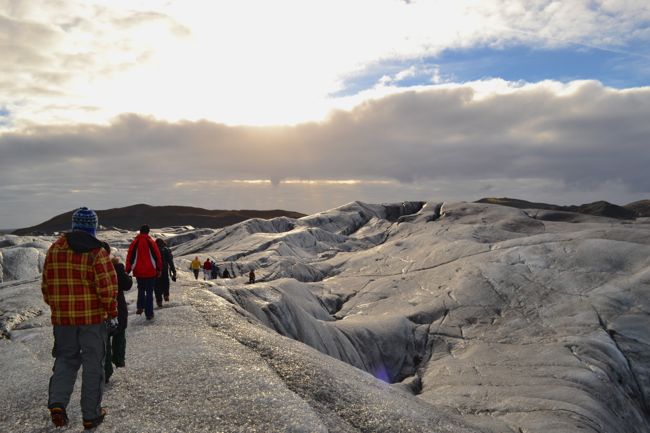
If time allows, continue east towards the glacier lagoons. Watching icebergs drift through bright blue water is one of those experiences that doesn’t quite feel real.
Even if you only make it part of the way, the drive itself is worth it. The scenery becomes increasingly dramatic with every mile.
Then simply turn around and enjoy the journey back, stopping wherever catches your eye.
That’s the beauty of campervan travel, the itinerary never needs to be rigid.
Practical tips for your first Iceland campervan trip
Pack layers, regardless of the season.
Icelandic weather changes quickly and you’ll often experience sunshine, rain and strong winds all within the same day.
Bring a reusable water bottle.
The tap water in Iceland is some of the best in the world and you’ll never need to buy bottled water.
Don’t over-plan your itinerary.
It’s tempting to create a minute-by-minute schedule, but some of the best moments happen when you allow room for spontaneity.
Give yourself extra time for driving.
Not because the roads are difficult, but because you’ll constantly want to stop for photographs.
And finally, embrace the unpredictability.
Some days you’ll have bright sunshine. Other days you’ll have dramatic clouds and moody weather.
Both are beautiful.
In fact, Iceland’s ever-changing weather is part of what makes it so special.
Would I do Iceland by campervan again?
Absolutely. In fact, I can’t really imagine exploring Iceland any other way now.
There’s something incredibly freeing about having everything you need with you while travelling through one of the most beautiful countries on earth.
You spend less time worrying about logistics and more time soaking up the scenery.
You follow your curiosity. You stop when you want. You linger longer at the places you love. And in a destination that feels like a magical kingdom of fire and ice, that’s exactly how travel should be.
If you’ve been dreaming about Iceland but wondering whether a campervan is really worth it for a short trip, my answer is a definite yes!
Because sometimes the best travel memories aren’t made when you arrive somewhere, they’re made on the road in between.